3D Printing at AkkuPlus – Precision Meets Innovation
At AkkuPlus, we utilize state-of-the-art 3D printing technology to manufacture customized components for battery packs, rechargeable batteries, and related accessories. This innovative manufacturing process enables us to respond quickly and flexibly to customer requirements while developing precise, efficient, and sustainable solutions.
What is 3D Printing?
3D printing is an additive manufacturing process in which components are built layer by layer from high-quality plastic materials. At AkkuPlus.com, we use this technology to produce a wide range of customized parts, including battery cell holders, charging stations, battery mounting systems, and other application-specific components.
Benefits for Our Customers
- Customized Solutions: Tailor-made components designed for specific battery packs and rechargeable battery models.
- Fast Production: Short manufacturing times for prototypes, small production runs, and custom projects.
- High Precision: Accurate and reliable parts for secure battery assembly and installation.
- Sustainable Manufacturing: Reduced material waste through targeted and efficient production processes.
Typical Applications
- Custom charging stations for rechargeable batteries
- Battery cell holders for lithium-ion battery packs
- Battery mounting brackets and retaining systems
- Protective housings and support components
- Custom-designed parts for retrofit and battery refurbishment projects
- Prototype development and small-batch production
Why Choose 3D Printing?
Compared to conventional manufacturing methods, 3D printing offers greater design flexibility, shorter development cycles, and cost-effective production for custom-made components. This makes it particularly suitable for battery technology, prototype development, retrofit projects, and specialized industrial applications.
By combining our expertise in battery technology with modern additive manufacturing, AkkuPlus.com can deliver custom solutions that meet exact technical requirements while ensuring high quality and reliability.
Industries We Serve
- Industrial battery systems
- E-bike batteries and charging solutions
- Power tool battery packs
- Medical and measurement devices
- Robotics and automation
- Research and development projects
- OEM and custom battery applications
Need a Custom Battery Component?
Whether you require a custom battery holder, charging station, retrofit component, or a completely new design, our team can develop a solution tailored to your specifications.
Contact us today and let us create precision-engineered 3D printed components for your battery and energy storage applications.

Is your cordless drill battery running out of power quickly? Learn the common causes, signs of worn battery cells, and when professional battery repair or cell replacement may be the right solution.


A replacement battery advertised with 3600mAh was tested under real-world conditions. Cell analysis and capacity measurements reveal the actual performance after multiple charge and discharge cycles.
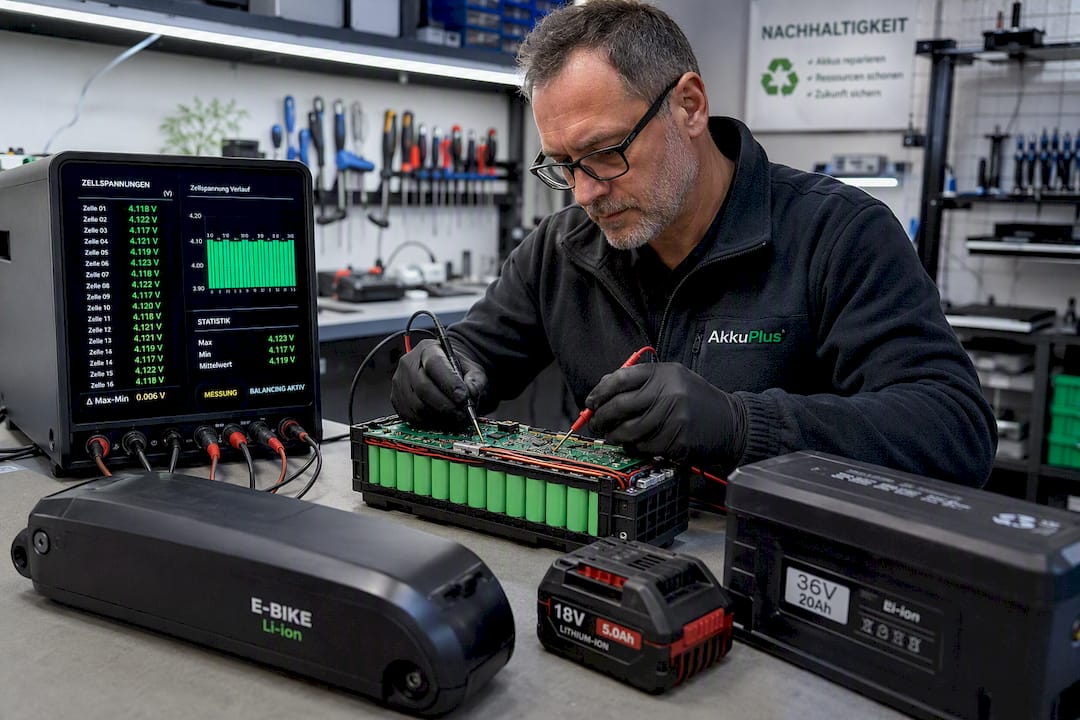
Is your battery losing performance even though it still works? Cell drift may be the reason. Learn how battery refreshing and balancing can improve battery performance and extend usability.
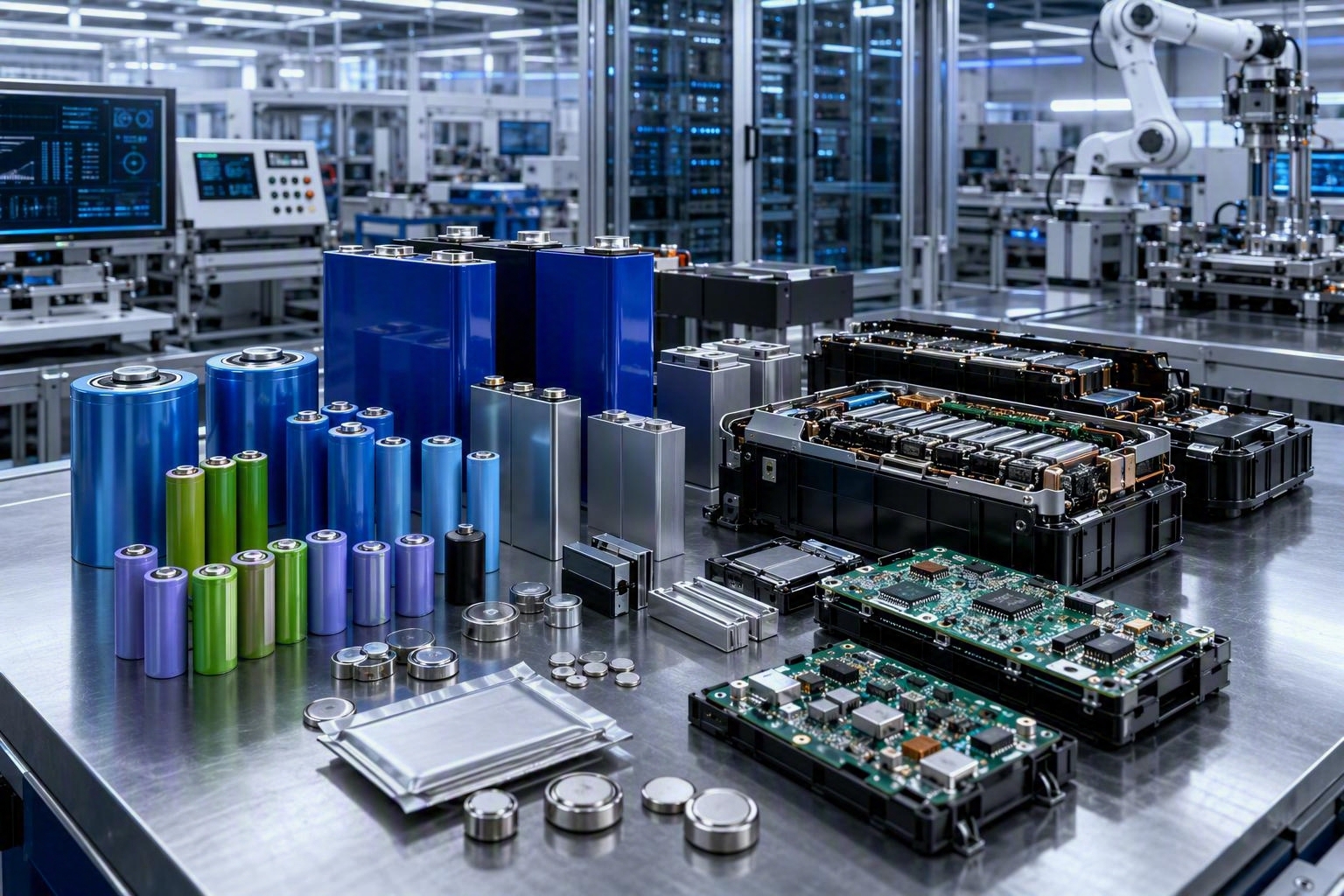
Industrial cells are the foundation of custom battery packs used in industry, medical technology, tools and electronics. Learn about cell types, applications and selection criteria.

Is your AEG or Prophete battery losing range and power? Professional battery repair with cell replacement restores performance while keeping the original housing and electronics.
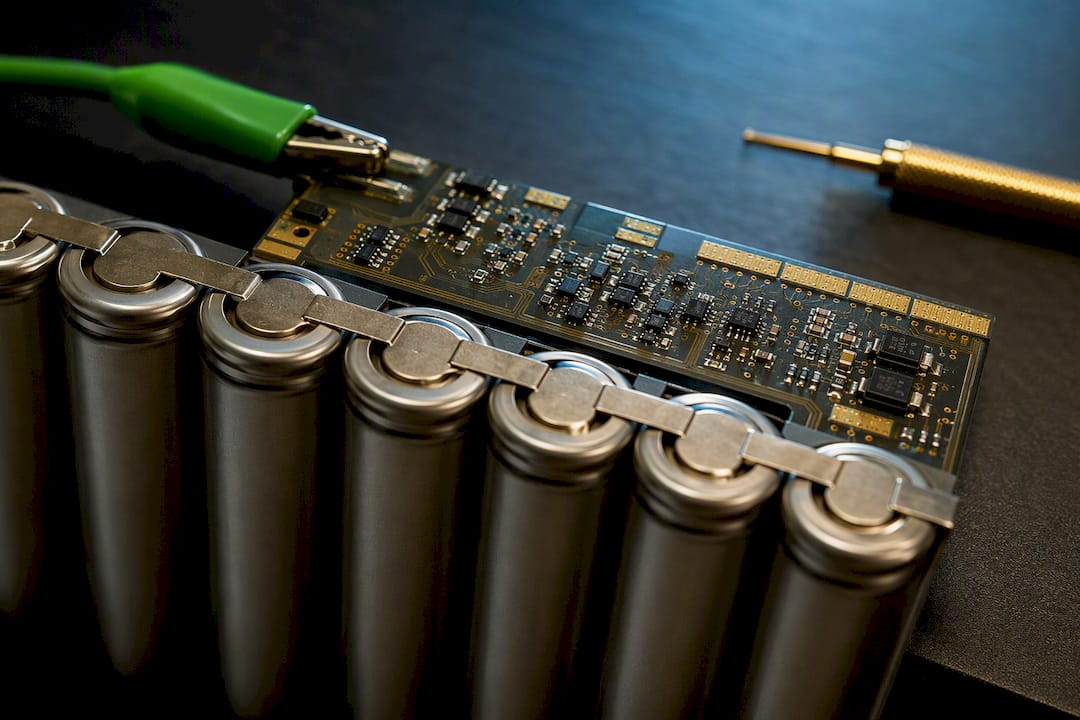
Ein BMS ist die elektronische Schutz- und Steuerungseinheit einer Batterie. Sie überwacht Zellspannung, Strom und Temperatur, greift bei kritischen Werten sofort ein und sorgt so für Sicherheit und eine längere Lebensdauer. Bei Blei-Säure-Batterien lässt sich darauf oft verzichten, bei Lithium-Ionen-Zellen ist ein solches System praktisch zwingend, weil die Chemie sonst schnell irreversibel Schaden nimmt. Ohne diese Kontrolle drohen Kapazitätsverlust, Überhitzung oder im schlimmsten Fall ein Brand.

Copilot said: A charge cycle describes a complete charge from 0% to 100% and back down again, whether it happens in a single session or is spread across multiple partial charges. How many of these cycles a lithium-ion battery can withstand before noticeable degradation occurs depends less on the cycle count itself and more on factors such as temperature, charging range, and depth of discharge. The industry typically defines the end of battery life, known as End of Life (EoL), at around 80% remaining capacity. In other words, charge cycles are only one piece of the puzzle and do not tell the whole story.

The most reliable method for measuring battery capacity is a controlled constant-current discharge. All other methods provide only estimates or trend indicators rather than true capacity values. In this process, the battery is discharged at a defined current down to its cutoff voltage, and the extracted charge is calculated using the formula: Capacity (Ah) = Current (A) × Time (h) The result is reproducible, compliant with industry standards, and can be directly evaluated as a measure of the battery’s State of Health (SoH).

Wussten Sie, dass in Deutschland jedes Jahr rund 40.000 Tonnen Batterien verbraucht werden? Jede einzelne Batterie enthält wertvolle Rohstoffe wie Zink, Kupfer oder Lithium, die bei falscher Entsorgung verloren gehen und die Umwelt belasten. Wer Batterien richtig entsorgt, schützt nicht nur Böden und Gewässer, sondern sorgt auch dafür, dass wichtige Materialien wieder in den Kreislauf zurückkehren und Ressourcen geschont werden.

Klare Sicht. Autarke Energie. Behagliches Licht. Ob spontane Abende am Lagerfeuer, Vanlife‑Trips oder entspannte Stunden im Garten – mit der richtigen Ausrüstung wird aus einem einfachen Moment ein echtes Erlebnis. ➡️ Sichere dir jetzt deine Campfire-Ausrüstung – nur bis...

Die Akku- und Batteriebranche befindet sich aktuell im Wandel: Neue gesetzliche Vorgaben, steigende Rohstoffpreise und technologische Innovationen verändern den Markt spürbar. Für Verbraucher, Unternehmen und Händler ergeben sich daraus sowohl Herausforderungen als auch neue Chancen.

Ein sogenannter EEPROM‑Fehler tritt bei modernen Akkus mit Batteriemanagementsystem (BMS) auf und führt häufig dazu, dass der Akku nicht mehr erkannt wird, nicht lädt oder sofort wieder abschaltet. Für viele Nutzer wirkt ein solcher Fehler wie ein Totalausfall – in der Praxis ist das jedoch nicht immer der Fall.
